
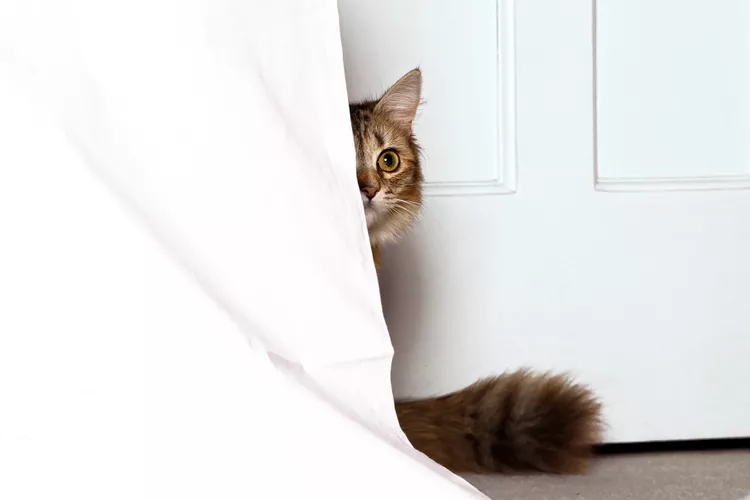
Cats love to hide in things like cardboard boxes and paper grocery bags. Your cat may even enjoy hunkering down under a coffee table or chair. Why do cats like to hide so much and how can you provide safe spaces for your cat to hide in?
Why Do Cats Hide?
Cats enjoy being in enclosed spaces, like under furniture and in cardboard boxes, because they like to feel safe and secure. Hiding is a normal behavior for a cat to have. It can be patterned, such as hiding by the water heater or clothes dryer in the colder months. Concern arises when a cat starts hiding much more frequently. A normally social cat that suddenly hides more often may be ill, stressed, afraid, or a combination of the three.
If your cat starts to hide more frequently, ensure that they are eating, drinking, and toileting normally. Cats may start hiding more if they don't feel well and any pain or discomfort your cat may be feeling may also affect their dietary and bathroom habits. Hiding more often because of a medical ailment is considered to be a non-specific symptom in cats. This means that, if your cat is hiding because of a medical problem, it can be due to any number of disease processes. Your veterinarian may be able to hone in on a specific reason with the aid of a thorough physical exam as well as tests such as blood work and radiographs.
If your veterinarian cannot find anything wrong medically with your cat, then your cat's sudden interest in hiding all the time might be a true behavioral concern. Cats can easily become stressed from environmental changes. Things like moving to a new home, new people or pets in the home, or even just rearranging furniture can stress a cat out. In home with multiple cats, it's entirely possible that one cat is bullying another cat; so the bullied cat may be hiding because they are nervous to be out and about where the bully cat may see them. This is actually a somewhat common problem in multi-cat homes and is termed intercat aggression. Cats can also have noise phobias like dogs sometimes do, so things like thunderstorms and fireworks may have your cat hiding simply out of fear.
If your cat is hiding more often because of stress or fear, your vet may recommend anti-anxiety medications, such as amitriptyline, clomipramine, or fluoxetine. Medications such as Gabapentin can help relieve stress during acutely stressful events, such as for vet visits, during thunderstorms, firework displays, or travel. As with most behavior problems, though, medications aren't a permanent solution. Rather, they help relieve stress in your cat while you both work to decrease the stressors. Adding pheromone diffusers, such as Feliway, can help make your home 'smell' more cat friendly to your cat. Don't worry, you won't be able to smell the diffuser, but the pheromone it releases can have a calming effect in cats. Allow your cat to slowly warm up to new people in your home.. A cat will warm up to someone who can respect their space, both living and personal, far more quickly and they will be far less stressed if they aren't forced into unwanted snuggle sessions. Intercat aggression is a more nuanced problem and your veterinarian can suggest changes in your home set up, such as adding cat shelves in high traffic areas like hallways and increasing resources like food/water bowls and litter boxes.
How to Provide Safe Hiding Spaces for Your Cat
Since hiding is a normal behavior in cats, instead of stopping your cat from hiding, it's best to provide safe spaces for your cat to hide. This way they won't hide in unsafe spaces, such as the washer and dryer or behind appliances. Most cats like being high up off the floor. So providing cozy spaces, such as a cat bed on a sturdy bookshelf or a cat tree with a built in cube space, can be an alluring hiding spot.
Older cats can be arthritic, even if they don't show it, so older cats may appreciate hiding spaces down low. This can include cardboard boxes, either homemade or commercially produced scratcher houses, but it can also include their carrier. In fact, leaving your cat's carrier out all the time with comfy bedding inside can make it easier for you when it's time to take your cat to the vet. If your cat sees their carrier as a safe hiding spot, it will be easier to place them in it when it's time to go somewhere.
Hiding is a perfectly normal behavior for your cat to have. You really only need to be concerned if they are hiding more frequently or if they are hiding in unsafe areas. For more ideas on how to create safe hiding spots for your cat, or for more information on when you should be concerned about your cat's hiding, speak to your veterinarian.