
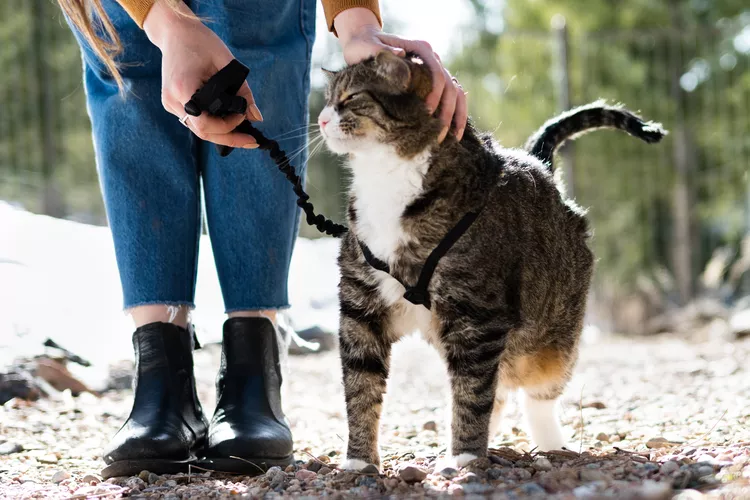
Cat lovers who want their cats to enjoy fresh air, sunshine, and the ambiance of trees, bushes, and plants, often feel guilt by confining their cats to the indoors. This was the mindset in previous generations: that cats were free and independent creatures and should not be confined. That they cannot be healthy, happy, and active, if not allowed to experience all the glories of the outdoors.
Today, we understand the hazards of allowing cats to roam freely, either by personal experience, hearsay or through the media, including the Internet. Here are just a few of the outdoors dangers, although not an exhaustive list.
- The risk of contracting serious and potentially terminal diseases, including FIV, FeLV
- The risk of parasitic infections
- Injury and/or death from attacks by dogs, other cats, or predators
- Injury or death from vehicles
- "Cat-napping" for profit, or personal gain
- Trapping and disposal by cat-hating neighbors
- Risk of becoming a victim of animal cruelty
- Confiscation by animal control authorities
- Risk of ingesting toxic plants and exposure to pesticides
- Risk of minor injuries or illnesses going undetected and turning into more serious problems by the time your cat comes home
- Risk of your cat injuring or killing local wildlife
On the other hand, there are some safe compromises to offer your indoor cat the best of both worlds, without the potential hazards of free-roaming outdoors.
Carrying Your Cat
Gary Loewenthal, former Host for the About Cats forum used to carry his cat Mike around their backyard, allowing him to sniff and explore at will. Mike's nose led Gary on their walk, and each outdoor expedition was a bit different than the last. These explorations are best kept to a very short time—10 or 15 minutes—as most cats will become too eager to jump down and explore on their own. If you are considering bringing your cat outdoors, it would be best to try this first with your cat in a safe carrier such as a cat stroller or their travel bag. Unpredictable noises or other surprises can startle even the bravest cats when they are not accustomed to being outside. A scared cat could easy wriggle free and run away, or even unintentionally scratch or bite you in their panic. It would be best to give your cat time to adjust to these outings before attempting these next steps:
Leash Training
Some cats can be trained to wear a harness and leash, using a gradual method of training. Many cats will initially feel confined by the additional weight of the harness, and their first attempts at walking on a leash will appear to be more of the "slinking" or "belly-crawling" variety. Some cats may also find ways to slip out of the harness or tangle themselves in the leash, so it is best to practice indoors with short sessions to determine if your cat will tolerate this. Given time and patience on the part of the trainer, some cats will enjoy leash walking.
Some cats may prefer to just "lie around" outdoors on their leash, as does our Jaspurr (pictured above), who is a beginner in "leash etiquette." Although Jaspurr is at the "belly-walking" stage, he eventually may progress to walking with us. It's all a matter of time and patience if your cat is amenable to this activity.
Please note that tying a cat outside on a leash is not a substitute for personal interaction and supervision. Cats should never be left alone with a leash or a rope extension attached to them. There is too much danger of them becoming tangled up, with the possibility of strangulation, as well as high risks of them slipping out of the leash and running away.
We recommend a sturdy harness or walking jacket, as opposed to a collar. Collars can be slipped too easily, which will most likely happen in times of fear, such as when meeting a strange dog or cat on the street, loud noises, fast-moving vehicles, or even approaching strangers. Also try to buy as lightweight a leash as possible, consistent with safety. The additional "drag" of a bulky leash will slow your cat's walking progress.
Be sure to test your cat's "leash quotient" indoors for several days before taking him outside. Slow introduction and short sessions will give you the best change of getting your cat acclimated to this idea and will result in a cat with a safe and happy indoor-outdoor experience. If after many sessions indoors with lots of positive reinforcement (treats and toys) your cat does not seem to be adjusting or is showing signs of stress or aversion to the harness, consider one of these other safe ways to introduce your cat to the outdoors.
A Personal Carrier
If you decide that you want to make your cat a "traveling cat," we suggest purchasing a vest or backpack cat carrier that is comfortable and sturdy to give your cat a safe space to observe the outdoors. We purchased a personal vest-style carrier, called "Pet Pocket 2," manufactured by Global Pet Products. We bought the basic version, with a black mesh "pocket" that comfortably held our cat safely with a drawstring adjustment and a metal clip that attaches to his harness. There are many other kinds of carriers on the market as well, so make sure to choose one that gives your cat enough room to comfortably lay down and turn around. You may have to try a few different styles to figure out which one suits your cat best.
Wheeled Walker or Stroller
The Kittywalk Stroller provides both a durable nylon netting "cage" so kitty can enjoy the outdoor experience and a water-resistant canvas shade for protection from the sun. The Wheel Away converts to a backpack, car carrier, and bed. These stroller-style carriers can be a great option since they allow you to take longer walks with your cat without having to carry them, and it keeps your hands free for other things. Many cats feel safe if they have some privacy or space to hide so the partial shade can give them a sense of security in the great outdoors.
Outdoor Enclosures
For cats who would prefer to "free-roam" (within limits), outdoor enclosures are ideal. They can be built from scratch, with your own or purchased plans, or assembled as modular enclosures. A free-roam set-up requires you to have a private outdoor space where you can construct a permanent structure. The advantages are that it gives cats total freedom to wander and explore within a safe space. It will require ongoing maintenance to ensure the structure remains sound and that no defects form over time that could cause injury or be a site where cats could escape.
Your experiences may vary with any or all of these means of providing a safe outdoor experience for your cats, but we think you've been given enough alternatives here to get you started.