
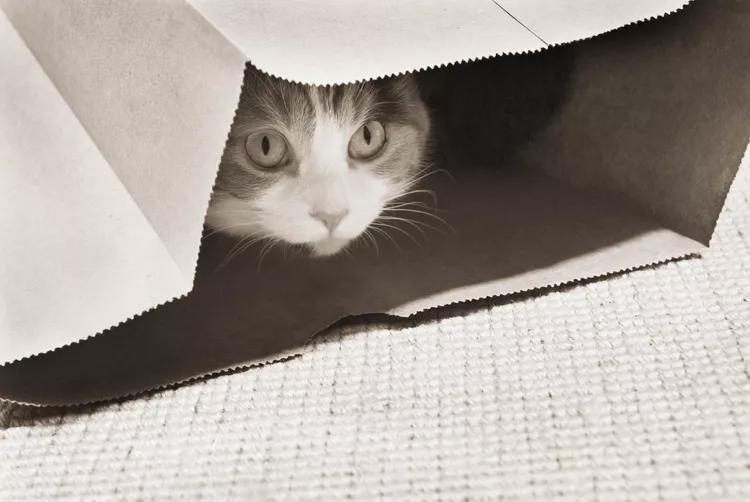
Working with fearful cats can be a challenge because people often confuse their behavior with aggression. Does your cat hiss at strangers? Dive under the bed when the doorbell rings? Attack other pets or humans? While a normal dose of caution keeps cats out of danger, extreme fear makes cats miserable and disrupts a happy home. Fortunately, there are things you can do to calm your cat's fears, though it will take time and patience.
Create a Calming Environment
Cats are observers and very cautious by nature. They take their time getting to know everything and everyone before they are comfortable enough to explore and socialize. With timid or fearful cats, it's best to let them work this out on their own, but there are ways you can encourage it.
Provide your cat with high perches and calm places where they feel safe and can get away when needed. Make it inviting with things like catnip or feline pheromone spray and diffusers, which do wonders for calming down cats.
It's tempting to be very cautious around fearful cats but that's not the best approach. You want your cat to get used to your home as it normally is, so walking on eggshells because you don't want to upset kitty is not going to work. Act normal, but try to keep the home as calm as possible. Don't lose your temper around your cat or yell at it, and do your best to avoid startling noises. A relaxed environment is one that both you and the cat can benefit from.
If you have multiple cats in your home, keep in mind that fearful cats can also be targeted by other cats. Felines that act like a victim may as well wear a “kick me” sign. The other cats obligingly turn the shrinking violet kitty into a punching bag. If a scared cat can’t get away from a perceived threat, it will use aggression to defend itself.
Designate a Kitty Room
Sometimes having a full house to explore is too much for a cat, so you may need to temporarily narrow your cat's range. Remember that cats are territorial, so having a big space to "oversee" can be overwhelming.
Creating a room just for your cat can be a good approach. It creates a home within a home and has all the comforts kitty needs, including food, litter, a bed, and toys. This can become a safe haven in any spare room that doesn't get a lot of normal traffic. It's not off-limits to people, of course, but can offer comfort to your cat.
At first, you can keep the door closed until kitty adapts to its surroundings. After a while, open the door and let it explore the rest of the house at its own pace. This may be at night when everyone's asleep and that's OK. You can also leave a bowl of treats in another room to encourage your cat to explore more often and close off potential hiding spots.
Take It Easy
Encouraging timid cats to break their cycle of fear takes time. Be very patient and don't force your cat to do anything. That means you shouldn't poke your head under the bed or carry and place it anywhere in the house against its will. This will only reinforce the scared behavior.
Let the cat come to you. You can encourage interaction by speaking softly and offering positive experiences, but don't push it. If there's a person in the home who the cat is particularly uncomfortable with, have them feed the cat. With time, the cat will learn that people are not a threat.
Offer Positive Experiences
Just like dogs, cats do best when offered positive experiences. Offer your cat treats and toys to soften their fear. Encourage interaction with toys cats can't resist but give it space. A long feather wand is perfect because the cat can play with you while keeping what it perceives as a safe distance.
If your cat is very timid, place treats near your cat and step away. Over time, slowly move closer or stay longer each time you do this and talk in your soft, encouraging tone. If you're patient, you can work it up to taking a treat out of your hand.
For cats who are scared in specific situations, such as when a stranger enters the house, concentrate on overcoming that fear in particular. Whenever someone comes over, give your cat a treat so they know it's OK for that person to be there. These situations will take more time and you might be able to enlist the help of understanding friends or family members who come by regularly.
Problems and Proofing Behavior
While a hiding cat may not bother you, constant anxiety increases the stress that can make cats sick. For instance, stress can aggravate bladder inflammation (cystitis), which in turn prompts hit-or-miss bathroom behaviors. Even when the bladder doesn’t hurt, anxious cats use potty deposits or will increase scratching behavior as a way to calm themselves—sort of the way nervous humans bite their fingernails.
For these reasons, you might need to seek the help of your veterinarian or a cat behaviorist if you have patiently tried the other methods without success. There are medications available which your vet may prescribe, but they aren't magic and won’t turn your terrified tabby into a social butterfly. However, they can help get your cat in the right frame of mind to learn, by helping to normalize brain chemistry gone haywire.
Pilling cats, especially fearful felines, can make their anxiety worse and leave you a bloody mess. Most drugs can be compounded into tasty treats, or turned into salves you can smear on the cat’s ear to be absorbed through the skin. Some medications may take several days or weeks before you’ll notice any improvement, so be patient.
Drug therapy generally isn’t used forever and it can have side effects. These solutions work best when paired with behavior modification, counter conditioning, and desensitization techniques that teach the cat better ways to deal with its fears. This is where a veterinarian behaviorist can be of tremendous help.
The most important thing to remember is to avoid pushing your scared cat into situations it finds uncomfortable, which means there's no good way to actively proof the behavior. Allowing the cat to be wary and overcome fears on its own is the best way. Over time, it's likely that the cat will have more confidence when exposed to new experiences in the future.