
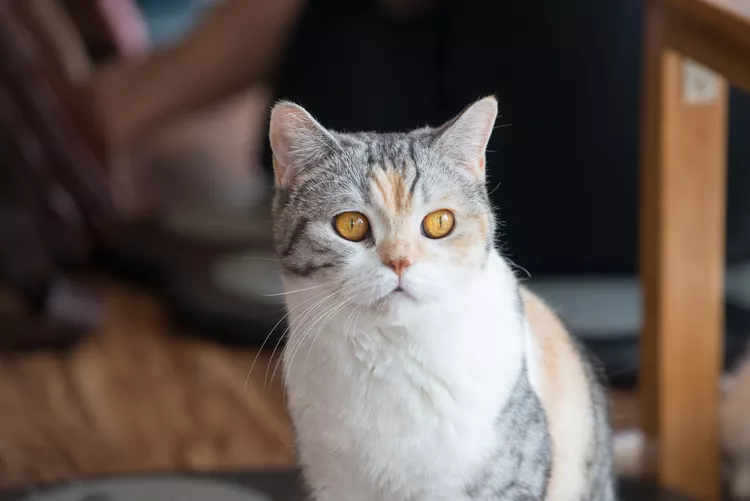
The American wirehair cat is a recently discovered and developed breed that is still relatively rare. Native to upstate New York, and born in a barn, the wirehair carries a natural genetic mutation that creates its unique wiry coat. Although it is generally wary of strangers, this cat reserves its affection for its family and makes a great pet for a loving, laid-back home with plenty of opportunities for exploration and play.
Breed Overview
Personality: Quiet, affectionate, shy with strangers, energetic, and playful
Weight: Up to 8 pounds
Length: Up to 15 inches
Coat Length: Medium hair
Coat Colors: White, black, blue, red, cream, silver,
Coat Patterns: Tabby, tortoiseshell, calico, bicolor
Eye Color: Gold or blue
Lifespan: Up to 20 years
Hypoallergenic: No
Origin: United States
American Wirehair Characteristics
Known for being shy or reserved with unfamiliar people, the American wirehair may take its time getting to know you. But, once you're friends, this cat's true personality shines through. The wirehair is extremely affectionate and friendly with its family and can be quite silly and kittenish. While this breed has a generally calm, quiet temperament, it also has a lot of energy for exploring and playing. According to the International Cat Association (TICA), the American wirehair is extremely tolerant of children.
History of the American Wirehair
The discovery of this breed can be traced back to 1966 when, on a farm in upstate New York, a domestic shorthair barn cat had a litter of kittens from which only two survived. The little ginger-and-white male kitten caught the farmer's eye because of his unusually wiry coat.
The farmer contacted a reputable local breeder to come and take a look, and she was also surprised by the kitten's appearance. She bought both kittens to attempt to replicate the wiry coat characteristic in her breeding program with American shorthair cats.
The kitten's wiry hair is believed to have occurred as a result of a rare spontaneous mutation. It is a dominant gene mutation, meaning that at least half the kittens born from a parent with wiry hair will also be born with wirehair coats. Interestingly, the wirehair mutation has not been reported in cats from any other country in the world.
The American wirehair cat breed was promptly recognized by the Cat Fanciers' Association (CFA) in 1967 and was accepted for championship competition in 1978. The breed was registered with the International Cat Association (TICA) in 1979. Although still relatively rare, the breed is now being propagated across the United States and is well-loved by its enthusiasts.
American Wirehair Care
Grooming
The coarse coat of the American wirehair is low maintenance. It does not shed much, so a gentle weekly brushing will suffice to remove any loose hair. Take care not to rake through the coat too vigorously because the wiry hair may break more easily than the smooth coats of other cat breeds.
The wirehair's ears tend to accumulate a bit of wax, presumably because of coarse hairs growing just inside the ears. If you inspect them weekly and use a gentle ear cleanser when necessary, the ears should remain healthy and infection-free.
Routine nail trims and dental cleanings will also help keep an American wirehair in tip-top shape.
Exercise
The American wirehair is not a breed that is content with just lying around on your lap all day. While wirehairs do enjoy affection, they are also agile and energetic. They thrive on exercise and enrichment to keep them from becoming bored.
If you are away from home most of the day, then the American wirehair may not be the best breed for your situation. These cats enjoy being surrounded by familiar company, including respectful children and even family dogs too, providing they are introduced carefully.
While this breed is not known for being vocal, it is a prolific "purrer," so you will have no trouble recognizing that your kitty is content.
Common Health Problems
The American wirehair is one of the healthiest cat breeds. They have been bred via a rigorous and reputable breeding program that is dedicated to perpetuating their hardy genetics.
Appearance
The American wirehair is a small to medium-sized cat with a rounded head, medium-sized ears, and large eyes. While similar in appearance to the American shorthair, the wirehair's coat and more prominent cheekbones give it a distinctive appearance.
The springy, rough nature of the American wirehair's coat can vary according to the texture of the parents' coats. Some have slightly smoother coats; others can be quite coarse. The cats that are considered the best in the breed have hard, wiry hair all over their bodies.
The colors and patterns of the American wirehair breed can vary widely according to breed standards. The only exclusions are chocolate, lavender, and a Himalayan pattern.
Diet and Nutrition
Like any cat, the American wirehair should be fed a high-quality diet. Cats are natural carnivores and, as such, they need a high protein diet with a careful balance of vitamins and minerals.
Where to Adopt or Buy an American Wirehair
In general, American wirehair breeders are known for being very responsible—the trouble is finding one. The CFA and TICA maintain breeder lists but currently feature no listings for the American wirehair cat. Because this breed is still relatively rare and has few breeders, you may be subject to a waiting list when you locate a source.
American Wirehair Overview
The rare American wirehair cat has a uniquely coarse coat that sets it apart from the rest of its kind. It is a shy cat, at first, but it bonds deeply with its family and loves children. The breed has no specific health problems and is low maintenance in terms of grooming. The only problem with this cat is finding one because breeders are few and far between.
Affectionate and playful
Quiet
No genetic health issues
Rare (few breeders)
Needs a lot of attention
:strip_icc():format(webp)/personalities-of-popular-cat-breeds-554219-hero-d47de86e0d374f80afa374f8b7309847.jpg)
More Cat Breeds and Further Research
If you’re interested in similar breeds, check out:
Otherwise, check out all of our other cat breed profiles.
-
Are American wirehair cats friendly?
They are very friendly with their families but can be shy around strangers.
-
How much does an American wirehair cat cost?
These cats cost between $800 and $1,200 each—if you can find one!
-
Should you brush an American wirehair cat?
A wirehair can be brushed gently, taking care not to break the coat's coarse hairs.