
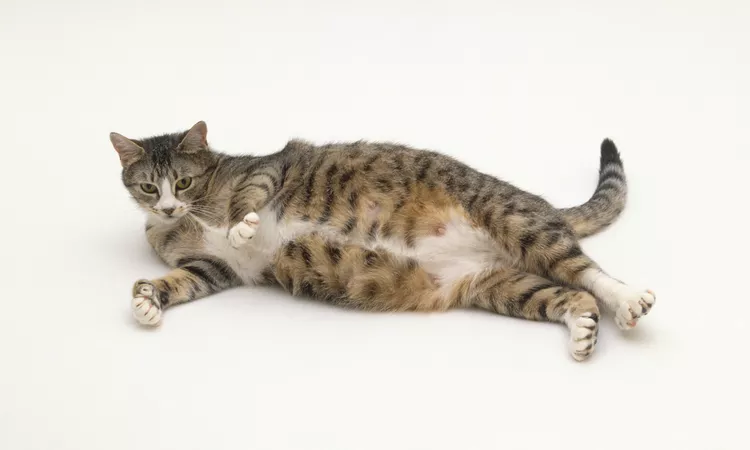
So you were a little slow in having her spayed and your cat turned up pregnant. Or, perhaps a pregnant stray adopted you. Maybe you are working with a rescue group and this is your first fostering experience with a pregnant cat. Where do you go from here?
Your first major decision is whether or not to allow the pregnancy to continue. Pregnant cats (called queens) can be spayed, which includes cat abortion, but the decision depends on a number of factors, which you should discuss with your veterinarian and your family.
Should Pregnant Cats Be Spayed?
Spaying a pregnant cat includes abortion, a word that evokes a variety of emotions. Proponents don't like having to take the lives of unborn kittens, but their position is based on pragmatic reasoning. Opponents simply do not like the taking of lives under any circumstances, whether born or unborn.
Spaying Helps Overpopulation
Many animal shelters automatically spay a pregnant cat that comes into the shelter. Some no-kill shelters allow the mother cat to give birth, especially if the pregnancy is late-term. Some rescue groups opt to never spay a rescued pregnant cat.
The enormous cat overpopulation problem is partially caused by cat owners' failure to spay or neuter their cats. Unspayed cats that spend time outside are highly likely to become pregnant. Whether owned, stray, or feral, these cats and their surviving kittens continue to mate, and the offspring from those matings continue to mate. Unspayed females can become pregnant by one or more of their non-neutered male kittens. A pregnant female cat and her descendants can account for the births of several hundred kittens in just a few years.
Spaying Can Help Animal Rescue Groups
Animal rescue groups, humane societies, and TNR (trap-neuter-release) groups are overwhelmed in trying to control cat overpopulation, and "kitten season," which extends for a long part of each year in many geographical areas, is met with dread by these groups. They know this year's kitten crop will be responsible for the deaths of last year's kittens or older cats at shelters. There simply isn't enough space to house them all, and something must give. It's a matter of supply and demand and young kittens are in the highest demand.
Spaying a rescued pregnant cat can help contain the overpopulation problem. There are simply too few homes for the huge number of homeless cats. Preventing an unplanned litter may also help prevent the deaths of living cats and kittens. Even when a pregnant female cat is adopted by the finder, and there are good homes waiting for her kittens, some people view each of those kittens as being indirectly responsible for the death of a shelter cat or kitten that might have been adopted into one of those homes.
Of course, there is no evidence that the people who plan to adopt the mother and/or kittens would have gone to the shelter instead. Perhaps they weren't even looking for a cat until they heard a friend, neighbor, or co-worker had adoptable kittens. An individual who is willing to keep both the mother cat and the kittens or find good, permanent homes for them, should not be made to feel guilty for allowing the birth. Of course, the mother cat and her kittens should be spayed and neutered as soon as possible.
Pregnancy Can Be Hard on the Queen
If the pregnant cat is very young, very old, or in poor health, pregnancy can cause even more health problems. Sometimes, the kindest and most compassionate action anyone could take with one of these cats is to spay her and abort her litter.
How to Decide If You Should Spay Your Pregnant Cat
- How "far along" is the queen's pregnancy?
Although early and mid-term spay and abortion of pregnant cats is common, late-term abortion is generally not done. If this is your cat, you can estimate how far along she is by the date of her last estrus cycle (heat). Otherwise, a veterinarian can estimate the term for you. - How old is the cat?
Very young cats (under one year) or older cats (8 years and older) are more likely to have complications during birth, including deformed or stillborn kittens, or the death of the queen. In addition, birthing and nursing a litter of kittens can harm the mother's health. - What is the cat's general physical condition?
If she is in overall good health and late-term pregnancy, you may decide to let the pregnancy continue to parturition (birth), depending on other factors. If she is in poor physical condition, pregnancy, birth, and nursing may endanger the mother cat. Your veterinarian can determine a mother cats health status prior to giving birth. - How well-equipped is your household for caring for newborn kittens?
This is a huge commitment, and everyone in your home will be involved at one point or another. If you have a safe room where you can confine the mother cat and her kittens from the intrusion of other cats, dogs, small children, and the like, you may be okay. Otherwise (in the case of a stray), you should probably turn the job over to experts, such as local rescue organizations. - How equipped are you to place the kittens and mother cat into good homes?
If you are one of those families who have plenty of room for more cats and are financially able to care for them, then it may be realistic to keep the mother and kittens. If you're thinking of finding homes for the kittens, be selective in your screening process. - Which is the more humane decision?
In the case of a pregnant feral or stray, would it be more humane to spay her and put her back onto the streets, or to try to rehabilitate her for placement into a new home with or without her kittens?
Caring for a Pregnant Cat
If you've decided to let your queen have her kittens, you likely have a number of questions about how to take care of your pregnant cat. A good place to start is with your veterinarian. Your main responsibility will be to feed a high-quality diet formulated for growth and to maintain a comfortable and safe environment for your pregnant cat.
A queen's gestation period typically runs from 65 to 67 days but can be highly variable. By the time you notice she is pregnant, she'll likely be at least three weeks along. By six weeks, the pregnancy becomes more apparent. At this time, your vet can take an X-ray to count the number of fetuses. Litters can range from one to eight or more kittens, with an average of two to five kittens and maximum numbers occurring with queens between the ages of 2 and 8.
It's helpful to know how many kittens are expected before the mother cat gives birth. A veterinarian can provide an estimated number of kittens based on a radiograph or an ultrasound. Although your cat is unlikely to need your help during labor and birth, complications can occasionally arise. You will be able to tell if she is in distress between kitten births if you know how many are expected. You can watch her give birth from a safe distance, only intervening if there's a problem.