
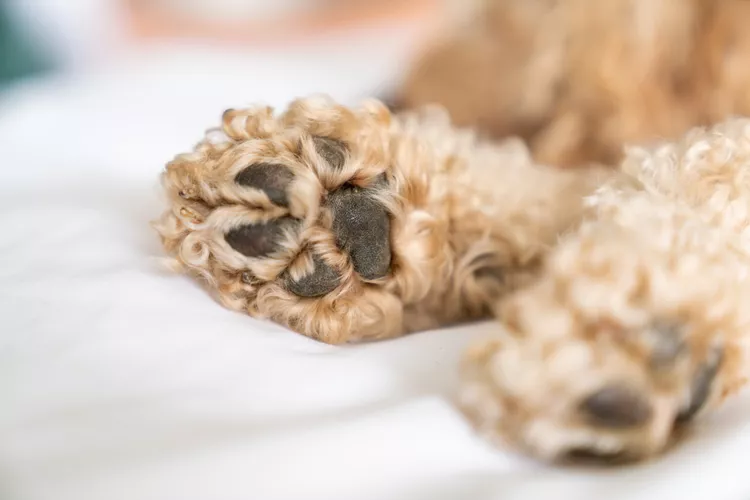
Paw pads offer insulation for a dog’s feet and provide traction while aiding with balance, slowing down, and stopping. They also act as shock absorbers for the bones and joints that make up the dog’s feet and legs. Despite the fact that they are durable and designed to withstand a large amount of activity and wear, they do encounter some problems. Dog paw problems can be caused by allergies, infections, cuts and abrasions, nail issues, cysts, or cracked paw pads It is important to check your dog’s paws regularly for any issues and be able to identify when something is afoot, literally. Then, you can take steps to keep them healthy and protected.
Symptoms of Dog Paw Pad Issues and Injuries
Causes of Paw Pad Issues and Injuries in Dogs
Allergies
Like humans, pets can suffer all sorts of allergies. Pets suffering from allergies will be itchy, especially in the paws, and typically will bite, lick, or chew on them to attempt to relieve the itching. They will also be more likely to have chronic ear and skin infections and anal gland issues. In some cases, excessive licking can cause irritation or injury and may make the paw more susceptible to secondary fungal and bacterial infections. Pets who excessively lick their paws should be evaluated for allergies by a veterinarian.
Fungal and Bacterial Infections
What causes dog paw infections?
Many different species of bacteria and fungi normally live on your dog's paw pads, but occasionally, these organisms can grow out of control and cause infection. Bacterial and fungal skin infections are common in dogs and often involve the paws.
Signs of an infection in the paws include licking and chewing the paws, redness, swelling, pain, itching, and drainage. Typically, the skin between the toes and other skin folds is affected with itching, redness, and greasy discharge. Sometimes, you may also notice brown discoloration of the nails.
How to treat a dog paw infection
These infections can also sometimes be secondary to an allergy. Your veterinarian is the best person to diagnose an infection in your pets and can prescribe a variety of treatments, including topical creams, wipes, and washes to treat them.
Nail Issues
- Overgrown toenails: Overgrown nails are common and can have negative consequences for your dog, making it difficult for your dog to walk. When a dog’s nails contact hard ground, the hard surface pushes the nail back up into the nail bed, creating pain for the dog. This can also put unnecessary pressure on all the toe joints. Overgrown nails also make it more likely for your dog to suffer from a fractured or torn nail.
- Torn nails: Torn or fractured nails occur when dogs catch their toenails on something. A common scenario is when a dog comes in from outside suddenly limping and sometimes bleeding. Upon closer inspection, you may find an injured nail. Torn and fractured nails can be very painful and commonly bleed, so it is best treated by a veterinarian.
- Ingrown nails: Nails that are not trimmed properly or naturally worn down by walking outside can become painful ingrown toenails, which grow into dog paw pad skin, similar to how a human ingrown toenail occurs. Ingrown nails can cause an infection if left untreated.
Burns and Blisters
If it is too hot for you to walk outside barefoot, it is too hot for your dogs, too. Always feel the pavement with the bottom of your bare hand before letting your dog walk on it. If you cannot comfortably hold your palm to the pavement for 10 seconds or more, it is too hot for your dog’s paws.
Unfortunately, pets can and do suffer burns on their paw pads from walking on surfaces that are too hot. Burned paw pads may look swollen, red, or blistered. Burns to dog paws are a serious medical issue and require prompt attention from a veterinarian.
Dry and Cracked Paw Pads
Pets’ paw pads are supposed to be somewhat rough so they can get traction on smooth surfaces. However, a variety of factors, including hot pavement, wintery conditions, chemicals, dry air, exposure to rough surfaces, and excessive licking can cause dry, cracked paw pads. Dry and cracked paws can be painful and put your pet at a risk for infection.
Cuts and Abrasions
Cuts, abrasions, and lacerations can occur at any time and are common because dogs run and play on a variety of terrains. It is important to keep an eye out for sharp objects on the ground when walking your dogs and to make sure you provide the proper protection when running on rough or uneven ground and even on the pavement. When injuries occur, it’s possible to find foreign objects such as small rocks, sticks, burrs, broken glass, and debris penetrating the skin of your dog's paws.
Parasites
Ticks are notorious for hiding out between a pet’s toes, where they can cause all sorts of problems, including pain and infection.If you can’t get to the vet, use tweezers or special tick removal tools to grip the tick from the head and gently pull it out. The head must become detached along with the body for successful removal.
Pets may also suffer from mite infestations in the paws, which can cause scaling, hair loss, and swelling. Your veterinarian will need to perform testing to diagnose and treat mites.
Cysts and Growths
Cysts, lumps, and growths can commonly occur on paws or between your dog’s toes. Contact your veterinarian if you spot one; they can treat and remove it if necessary.
Dog Paw Care and Prevention
Give Your Dog Pedicures
One of the best ways to take care of your dog's paws is to regularly trim their nails. Your dog’s nails should be trimmed when they grow long enough to touch the ground when the dog walks. How often you should trim your dog’s nails depends a lot on your dog—some breeds may not need their nails trimmed much at all.
Nail trimming should be a calm and low-stress experience for you and your dog. Teaching your dog to accept having their feet touched can help make nail trimming easier. You can also train your dog to file down its own nails by using dog scratch pads. Avoid holding down your dog or cutting your dog’s nails when they are showing signs of stress and fear. Just like humans, they remember unpleasant events, which will make future nail trims more difficult or impossible. There are a lot of great resources to help make nail trimming less stressful for you and your dog.
:strip_icc():format(webp)/best-dog-nail-clippers-4152969-da8829cd4e85480cb55d3ac916c4ffb2.jpg)
Consider Weather Conditions
In the summertime, it is important to avoid walking your dog on hot pavement or sand. In the winter, rock salt and chemical ice melts can injure your dog’s paws and can be ingested if your dog licks the paws. Try to avoid these scenarios and wash your dog’s paws in warm water to rinse away chemicals and/or salt after walks. Consider using a dog paw cleaner and applying a moisturizer to help prevent dry and cracked paws. Do not use lotions or moisturizers meant for humans on your dog. Consult your veterinarian for a dog-specific moisturizer.
Check Your Dog's Paws
It's important to do paw checks, preferably after playing outside or doing strenuous activities, as those are the most likely times for injuries to appear. It's also when your dog is most likely to get something stuck in their pad or between their toes, like a tick or rock. Take a look, and clear out any debris, watching out for injuries or blistering.
Apply First Aid
It’s important to have a dog first aid kit for minor injuries. If you do happen to find a minor cut or blister on your dog’s feet, clean it with mild soap and water. Consider bandaging the paw if there is continuous bleeding, taking care not to bandage the paw too tight or trap moisture for too long. You may also want to apply a dog boot to prevent further damage. Keep an eye on your dog and contact your veterinarian.