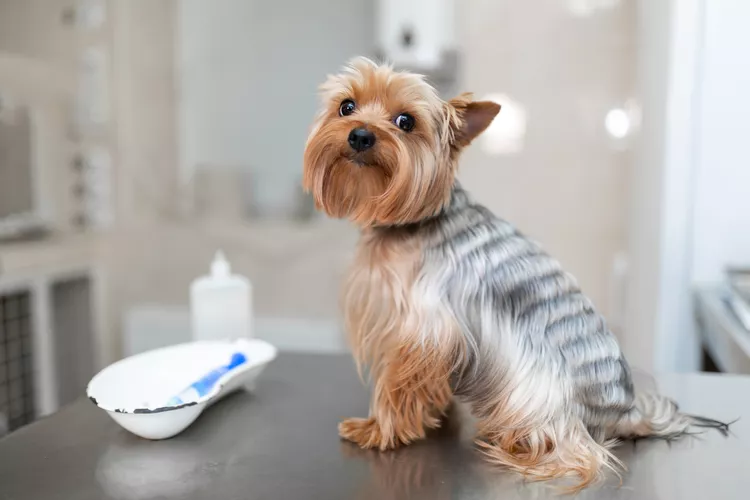
A liver shunt can go unnoticed in a dog but will likely cause serious health problems if left untreated over time. Severe liver shunts can cause seizures and may be fatal, so recognizing signs of this congenital condition may save your dog's life.
What Is a Liver Shunt?
A liver shunt in dogs is a congenital condition (present from birth) in which veins that should carry blood to the liver bypass the liver through an abnormal vessel. This allows blood to enter the body without undergoing the liver's filtration process to remove toxins, medications, and wastes from the blood. It also prevents the absorption of critical nutrients that would normally occur in the liver.
The veterinary terms, this condition is called a portosystemic shunt, or PSS. Some dogs have multiple shunts while others only have one, and dogs can also have intrahepatic (inside the liver) or extrahepatic (outside the liver) shunts.
Symptoms of Liver Shunts in Dogs
Most signs of liver shunts appear within the first few weeks of life, but others may not become obvious until later in life if the shunt is less severe.
The most common sign that a dog has a liver shunt is stunted growth. Runts of the litter are often diagnosed with liver shunts since this problem causes issues with nutrient assimilation from food. These small puppies may also be quieter or more reserved than their counterparts due to the issues with energy regulation.
Chronic liver shunts or severe cases may cause a dog to press its head on objects or people, stare at walls and doors, stumble around as though it is drunk, circle, and even have seizures. These neurological signs are often worse after the dog eats a meal.
Occasionally, vomiting and diarrhea may occur in dogs with liver shunts—particularly if the kidneys and bladder are affected by a buildup of toxins in the body. In these cases, excessive thirst and urination may also be seen.
Causes of Liver Shunts
Congenital portosystemic shunts are present at birth and are a result of one of two things that happened in the body:
- Ductus venosus stays open: The ductus venosus from the placenta that bypasses the liver stays open and intact even after the developing fetus no longer needs it in utero.
- Abnormal blood vessel development: An abnormal blood vessel develops in the body that stays open after the ductus venosus closes in utero.
One other type of liver shunt can occur in dogs due to severe liver disease but this is not present at birth and is called an acquired portosystemic shunt. This type of shunt is not seen in puppies but rather in older dogs that have been battling liver issues.
Breeds At Risk for Developing a Liver Shunt
There is no genetic test for portosystemic shunts in dogs, but breeds commonly affected include:
- Yorkshire terrier
- Miniature Schnauzer
- Maltese
- Australian cattle dogs
- Golden retrievers
- Labrador retrievers
- Old English sheepdogs
- Irish wolfhounds
- Cairn terriers
- Beagles
Diagnosing Liver Shunts in Dogs
After a full physical examination, your veterinarian will run blood tests to check the health of the liver and blood. A complete blood count, liver enzyme analysis, and a bile acid test are the starting points for diagnosing a shunt.
A urinalysis may also be performed to assess the health of the bladder and kidneys. Sometimes further diagnostic testing is recommended and may include an ultrasound, X-rays, CT scans, an MRI, or even surgery to visualize the liver and blood vessels.
Treatment
Surgery is often needed to correct and close the shunt. This type of surgery is usually very successful in dogs with only one extrahepatic shunt but multiple shunts or intrahepatic shunts may be present in some dogs which may not make surgery a curative option.
If surgery is not an option financially, a dog has multiple shunts, or the shunts are intrahepatic then medications and diet may help to manage the symptoms. Special diets that are low in protein and medications to help a dog tolerate protein are often used since dogs with liver shunts cannot metabolize it well. A veterinary nutritionist may be helpful in creating the ideal treatment plan for your specific dog.
Prognosis for Dogs with Liver Shunts
The majority of dogs respond well to treatment and go on to live normal lives. However, statistically speaking, surgery tends to produce better outcomes than medical treatment.
If neurological symptoms, such as circling, head pressing, and seizures, are present, this is usually due to the protein waste that isn't excreted from the body due to the liver shunt. Medications may help ameliorate these symptoms. But in extreme cases, euthanasia is elected if symptoms are not able to be managed.
How to Prevent Liver Shunts
Because nearly all liver shunts are congenital abnormalities, there is little that can prevent them. In purebred dogs, conscientious breeders can attempt to minimize the occurrence of shunts by not breeding any dog whose offspring have been diagnosed with liver shunts.
New